
Health: We All Know It, Do We? Rethinking What It Means
- Oct 5, 2023
- 2 min read
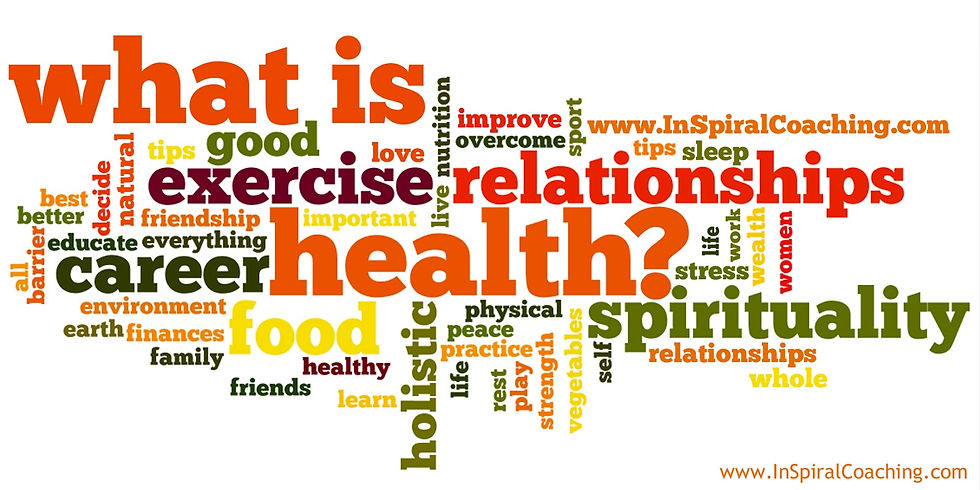
The concepts and definitions of illness, pain, health and well-being are complex and subject to ongoing debate. They are constantly challenged by the evolving nature of humanity, which includes contemporary issues such as global warming, pandemics, and disparities in resources and needs (Menatti et al., 2022). In 1948 the World Health Organization (WHO) adopted a definition of health, describing it as “a state of complete physical, mental and social well-being and not merely the absence of disease or infirmity.” (World Health Organization, 1948). While this definition was revolutionary for its time, it falls short by today's standards lacking important dimensions, such as the concept of environment (Menatti et al., 2022). Brook (2017) argued that the WHO’s health definition should also “include acceptance and tolerance.”
How we define health will significantly influence how humanity lives and enjoys life, as well as when to seek medical treatment or healthcare. It will also impact the sustainability of our healthcare systems, especially considering an aging population and the rise in chronic conditions (Huber, 2011). However, any definition of health, regardless of how well-crafted, inherently implies restrictions or boundaries by design. These boundaries will affect the healthcare system in a changing landscape. With increased life expectancy, a growing number of chronic conditions, and changing environmental and lifestyle factors, we need a more dynamic perspective on what health means to each individual. The term “complete” in WHO’s original definition is problematic because it implies perfection, which is difficult to measure or achieve in a large, diverse population (Huber, 2011).
To overcome the implied limitations of a definition, a conceptual framework could be used based on a person’s capacity to manage and fulfill their life and wellness, incorporating resilience and coping strategies to maximize their potential despite conditions or challenges in various dimensions of health (Huber, 2011). The conceptualization of health in the 21st century needs to be developed with input from all stakeholders, including lay individuals, physicians, patients, policymakers, and world institutions. This process will involve reimagining health concepts with resilience, capacity, and adaptability to address both external and internal health and well-being challenges (Huber, 2011). I urge the World Health Organization (WHO) to build upon the foundation of its 1948 definition and modernize the concept of health in response to current research and the evolving needs of humanity.
References
Brook, R. H. (2017). Should the Definition of Health Include a Measure of Tolerance? JAMA, 317(6), 585–586. https://doi.org/10.1001/jama.2016.14372
Huber, M. (2011). Health: How Should We Define It? BMJ: British Medical Journal, 343(7817), 235–237.
Menatti, L., Bich, L., & Saborido, C. (2022). Health and environment from adaptation to adaptivity: A situated relational account. History and Philosophy of the Life Sciences, 44(3), 38. https://doi.org/10.1007/s40656-022-00515-w
World Health Organization. (1948). Constitution of the World Health Organization. https://www.who.int/about/governance/constitution


Comments